2026 Minimum Wage SA
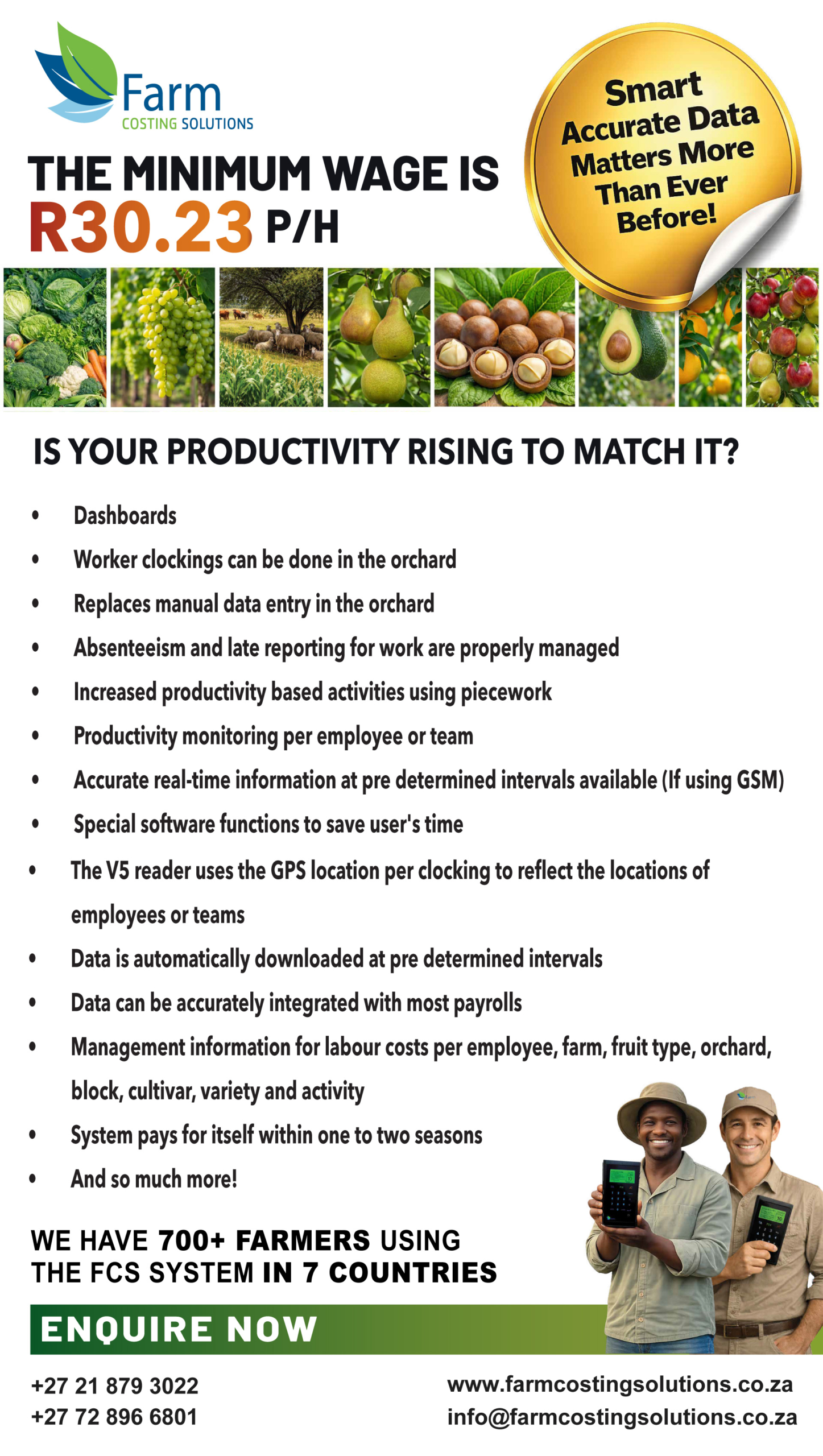
The 2026 minimum wage in South Africa continues to increase
The real question is not just about the increase in wages, but whether your productivity is rising to match it.
Rising pressure on farmers and agricultural businesses makes it increasingly difficult to maintain profitability. As a result, farmers must improve productivity more than ever before. Without the right systems in place, higher wages quickly reduce margins and increase financial strain.
In many cases, farmers pay more for labour without having full visibility into how efficiently they use it. As a result, inefficiencies, inaccurate time tracking, and poor labour management lead to lost time and unnecessary costs.
This is where accurate data and real-time insights become essential.
By implementing a reliable system to track time, attendance, and productivity, farmers can gain a clear understanding of where labour costs are being spent.
In addition, they can identify over-performing and under-performing areas, allowing them to make informed decisions that improve efficiency.
Better labour management helps ensure that every hour worked contributes to productivity. Instead of relying on manual processes or assumptions, farmers can use real-time data to monitor performance. Furthermore it helps reduce unnecessary costs and improve overall output. This not only supports compliance with wage regulations but also strengthens long-term sustainability.
As the 2026 minimum wage in South Africa continues to rise, the focus must shift from simply managing costs to actively improving productivity. With the right tools and insights, farmers can turn this challenge into an opportunity to optimise operations, increase efficiency, and remain competitive in a changing agricultural landscape.